10 Data Privacy Best Practices to Strengthen Your Organization
Chakrapani KVC | 23 Jan 2026 | 24 Jan 2026
The Data Privacy Day occasion serves as a powerful reminder that protecting personal data is no longer optional. In today’s digital-first environment, data privacy is a shared responsibility across leadership, employees, and the entire organization.
In 2026, data privacy has moved far beyond regulatory checklists. With expanding data protection laws, rising cyber incidents, and increased public awareness of privacy rights, organizations are under pressure to demonstrate accountability, transparency, and trust. Data Privacy Day provides the perfect opportunity to reassess existing practices and strengthen privacy programs for the year ahead.
Below are 10 essential data privacy best practices that help organizations build resilient, future-ready privacy programs that go beyond compliance and support long-term trust.
Establish Strong Data Privacy Governance
One of the most critical data privacy best practices is clear governance. Without defined ownership and accountability, privacy efforts become fragmented and ineffective.
Best practices include:
- Appointing a Data Protection Officer (DPO) or dedicated privacy leader
- Clearly defining privacy roles and responsibilities across business units
- Establishing a privacy governance or oversight committee
On Data Privacy Day, organizations should review governance structures to ensure accountability is clear, consistent, and aligned with business strategy.
Maintain Accurate Data Mapping and Inventories
You cannot protect what you cannot see. Comprehensive data mapping provides visibility into how personal data flows across systems, departments, and third parties.
Key actions include:
- Identifying what personal data is collected and for what purpose
- Tracking where data is stored, processed, and shared
- Classifying data based on sensitivity and risk
Refreshing data inventories on Data Privacy Day helps identify blind spots before they become compliance or security risks.
Embed Privacy by Design and Default
Privacy by design is a foundational principle among modern data privacy best practices. It ensures privacy protections are built into systems, products, and processes from the outset.
How to apply this principle:
- Integrate privacy into product and system development lifecycles
- Minimize data collection to what is strictly necessary
- Apply privacy-friendly default settings
Embedding privacy early reduces regulatory risk and demonstrates proactive compliance, an important message to reinforce on Data Privacy Day.
Strengthen Data Access and Security Controls
Weak access controls remain one of the leading causes of data breaches. Strong technical safeguards are essential to any effective data privacy program.
Effective controls include:
- Role-based access and least-privilege principles
- Encryption of personal data at rest and in transit
- Regular access reviews and monitoring
Aligning security and privacy controls strengthens organizational resilience and reduces exposure to data breaches.
Conduct Ongoing Privacy Risk Assessments
Privacy risks evolve as organizations adopt new technologies, expand operations, and work with third parties. Continuous risk assessment is a core data privacy best practice.
Key focus areas include:
- New systems, tools, and digital initiatives
- Cross-border data transfers
- High-risk or large-scale data processing activities
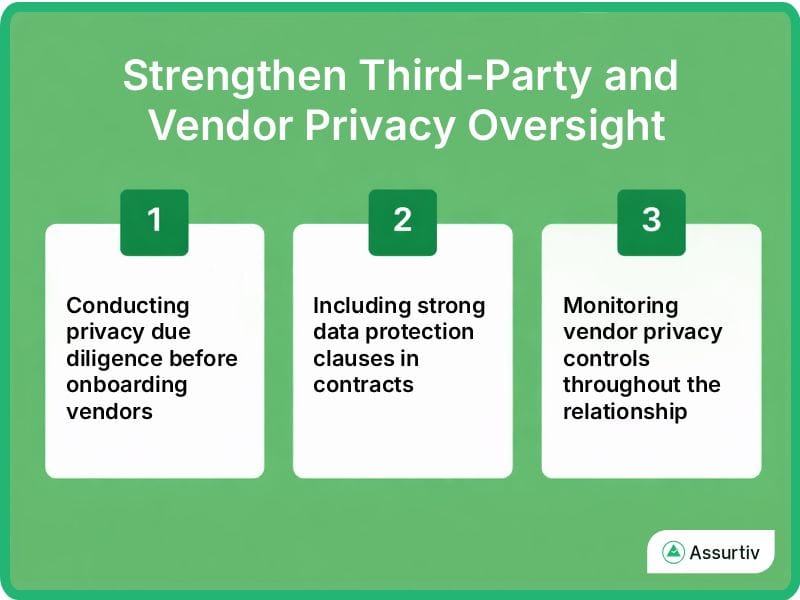
Strengthen Third-Party and Vendor Privacy Oversight
Third parties often represent one of the highest data privacy risks. Regulators increasingly expect organizations to manage vendor compliance effectively.
Best practices include:
- Conducting privacy due diligence before onboarding vendors
- Including strong data protection clauses in contracts
- Monitoring vendor privacy controls throughout the relationship
Strong third-party oversight extends data privacy protections beyond organizational boundaries.
Deliver Role-Based Data Privacy Training
Employees are the first line of defense in protecting personal data. However, generic training often fails to drive meaningful awareness or behavior change.
Effective data privacy training should:
- Be tailored by role and level of data exposure
- Use real-world privacy and breach scenarios
- Include ongoing refresher and awareness sessions
Data Privacy Day is an ideal moment to reinforce training messages and remind employees of their role in protecting data.
Build and Test Incident Response Readiness
Even mature privacy programs must be prepared for incidents. A well-defined and tested incident response plan is essential.
Key elements include:
- Clear breach detection and escalation procedures
- Defined response roles and communication channels
- Regulatory notification timelines and requirements
Regular testing ensures that teams can respond quickly and confidently when incidents occur.
Measure and Monitor Privacy Program Effectiveness
A strong privacy program is measurable. One of the most overlooked data privacy best practices is tracking meaningful performance indicators.
Useful privacy metrics include:
- Number and severity of privacy incidents
- Time to detect and respond to breaches
- Training participation and awareness levels
Data-driven insights enable continuous improvement and informed leadership oversight.
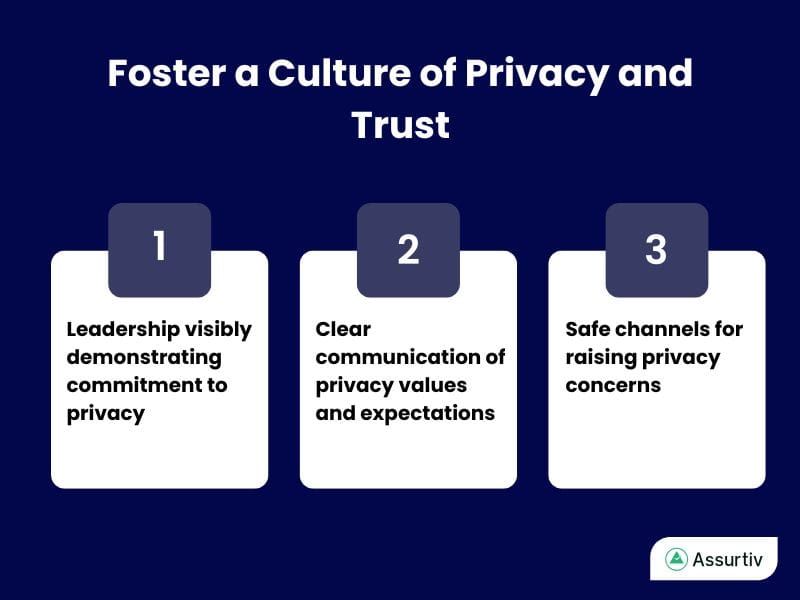
Foster a Culture of Privacy and Trust
Ultimately, data privacy is about people and culture. When employees understand the value of privacy and feel accountable, compliance becomes sustainable.
Ways to strengthen privacy culture include:
- Leadership visibly demonstrating commitment to privacy
- Clear communication of privacy values and expectations
- Safe channels for raising privacy concerns
Data Privacy Day is not just about policies; it’s about reinforcing trust and ethical data handling across the organization.
Conclusion
Data Privacy Day is more than a symbolic observance—it is a call to action. Strengthening your organization’s data privacy program requires governance, technology, training, and culture working together.
By applying these 10 data privacy best practices, organizations can move beyond reactive compliance and build privacy programs that protect personal data, reduce risk, and earn stakeholder trust throughout the year.
This Data Privacy Day, commit to making data privacy a business priority—not just a compliance obligation.