Pride in Building Trust, Safety, and Ethics Culture: A GRC Perspective
Dhiren M | 16 Dec 2025 | Not Modified
In today’s complex regulatory and risk environment, organizations are increasingly defined not just by what they achieve, but how they operate. Pride in building trust, safety, and ethics culture is no longer a soft value—it is a measurable business imperative. For organizations operating in regulated industries, this culture forms the foundation of strong governance, effective risk management, and sustainable compliance.
From data protection and information security to corporate governance and ESG accountability, pride in building trust, safety, and ethics culture directly influences resilience, reputation, and long-term growth.
Why Trust, Safety, and Ethics Culture Matter in GRC
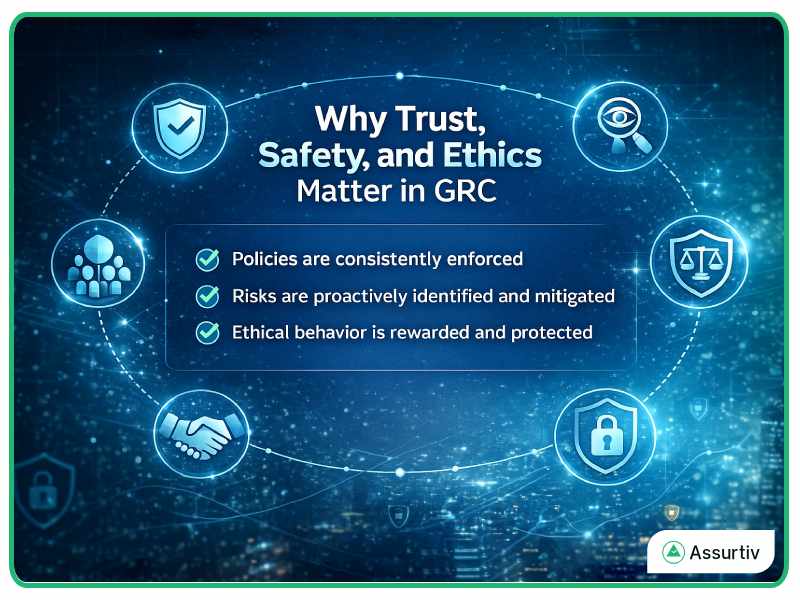
At its core, the Governance, Risk Management, and Compliance (GRC) discipline exists to establish trust—with customers, regulators, partners, and employees. Pride in building trust, safety, and ethics culture ensures that governance frameworks are not just documented but lived across the organization.
Trust is built when:
- Policies are consistently enforced
- Risks are proactively identified and mitigated
- Ethical behavior is rewarded and protected
A strong ethics and compliance culture reduces regulatory exposure, operational risk, and reputational damage—key objectives of any GRC strategy.
Governance: Embedding Ethics at the Leadership Level
Governance sets the tone at the top. Organizations that take pride in building trust, safety, and ethics culture start with leadership accountability. Boards and executive teams are responsible for embedding ethical values into decision-making structures, policies, and oversight mechanisms.
Key governance practices that support an ethics-driven culture include:
- Clear codes of conduct aligned with regulatory requirements
- Defined roles and responsibilities for compliance and risk ownership
- Transparent reporting and escalation mechanisms
Effective corporate governance ensures ethical principles are not symbolic but operational, reinforcing pride in building trust, safety, and ethics culture across departments.
Risk Management: Turning Ethics into Action
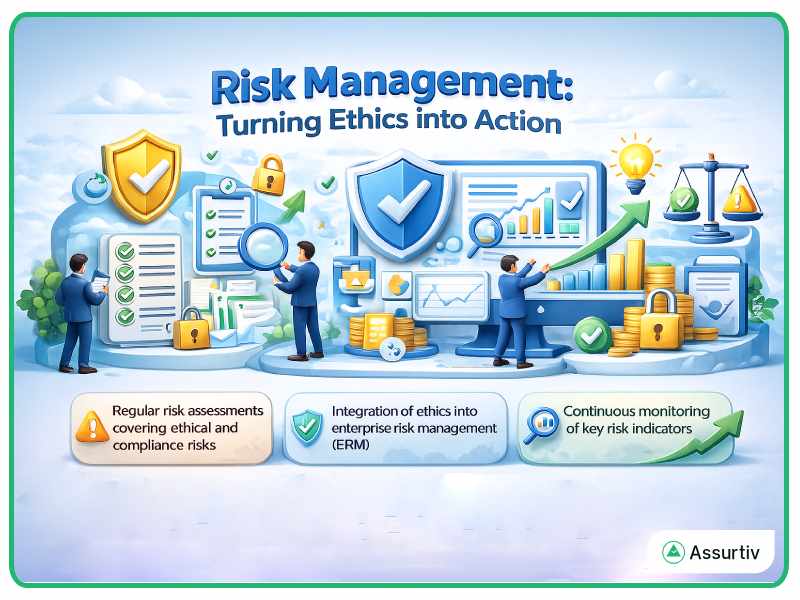
Risk management is where culture meets execution. Ethical organizations do not manage risk reactively—they anticipate it. Pride in building trust, safety, and ethics culture enables organizations to identify conduct risk, data privacy risk, and operational risk before they escalate into incidents.
A mature risk-aware culture includes:
- Regular risk assessments covering ethical and compliance risks
- Integration of ethics into enterprise risk management (ERM)
- Continuous monitoring of key risk indicators
When employees understand that ethical behavior is part of risk management, pride in building trust, safety, and ethics culture becomes embedded in daily operations.
Compliance as a Trust-Building Function
Compliance is often misunderstood as a checkbox exercise.
Compliance is a trust-building mechanism. Pride in building trust, safety, and ethics ofculture shifts compliance from enforcement to enablement.
Regulations such as the DPDP Act, GDPR, ISO 27001, and SOC 2 all emphasize accountability, transparency, and responsible data handling. Organizations that adopt these frameworks demonstrate pride in building trust, safety, and ethics of culture by aligning legal obligations with ethical responsibility.
Key compliance enablers include:
- Policy lifecycle management
- Employee awareness and training programs
- Internal audits and control testing
Compliance, when aligned with ethics, strengthens stakeholder confidence and organizational credibility.
The Role of GRC Technology in Shaping Culture
Technology plays a critical role in scaling pride in building trust, safety, and ethics culture. Manual processes often fail to provide visibility, consistency, and accountability—essential elements of a strong ethics culture.
Modern GRC software enables organizations to:
- Centralize policies, risks, and controls
- Automate compliance workflows and reporting
- Track incidents, investigations, and corrective actions
- Provide audit-ready evidence at any time
By digitizing governance and compliance processes, organizations operationalize pride in building trust, safety, and ethics culture rather than relying on intent alone.
Trust, Safety, and Ethics in a Data-Driven World
With increasing focus on data protection, cybersecurity, and privacy governance, safety has become inseparable from ethics. Pride in building trust, safety, and ethics culture ensures that data is handled responsibly; breaches are minimized, and individuals’ rights are respected.
A strong information security and privacy culture:
- Aligns with ISO 27001 and privacy frameworks
- Reduces data breach risk and regulatory penalties
- Enhances customer and partner confidence
In this environment, trust is earned through consistent ethical behavior supported by robust controls.
Building a Sustainable Ethics and Compliance Culture
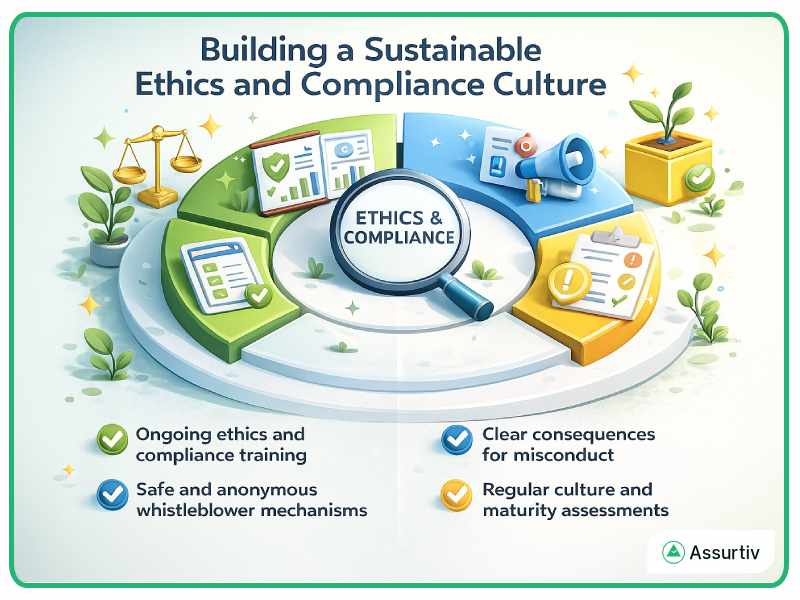 Culture cannot be enforced—it must be cultivated. Organizations that demonstrate pride in building trust, safety, and ethics of culture invest in continuous improvement rather than one-time initiative.
Best practices include:
- Ongoing ethics and compliance training
- Safe and anonymous whistleblower mechanisms
- Clear consequences for misconduct
- Regular culture and maturity assessments
These practices ensure that ethics are embedded into performance, not treated as a compliance afterthought.
Pride as a Competitive Advantage
Organizations that take pride in building trust, safety, and ethics of culture gain a measurable competitive advantage. Customers prefer trustworthy brands; regulators favor transparent organizations, and employees stay longer in ethical workplaces.
From a GRC maturity perspective, culture is the differentiator between organizations that merely comply and those that lead.
Conclusion
Pride in building trust, safety, and ethics culture is not aspirational—it is operational. It connects governance structures, risk management practices, and compliance programs into a unified system of accountability and transparency.
For organizations leveraging GRC software and services, this pride is demonstrated through measurable actions: strong governance, proactive risk management, and compliance rooted in ethics. In an era of heightened scrutiny and regulatory expectations, trust is the ultimate currency—and culture is how it is earned.