Compliance Culture: Build a Strong Foundation for Governance, Risk, and Ethics
Dhiren M | 23 Dec 2025 | 6 Jan 2026
A strong compliance program is not built on policies alone. Even the most comprehensive rules and controls will fail if employees do not understand, respect, and follow them. This is where compliance culture becomes critical.
Compliance culture refers to the shared values, behaviours, and attitudes that determine how compliance is understood and practiced across an organization. In today’s regulatory environment, regulators increasingly evaluate not just what policies exist, but how they are embedded into daily operations.
Here, I have explained what compliance culture is, why it matters, and how organizations can build and sustain a strong compliance culture as part of an effective governance, risk, and compliance (GRC) framework.
What Is Compliance Culture?
Compliance culture is the collective mindset that guides how employees approach laws, regulations, policies, and ethical standards. It reflects how seriously an organization takes compliance at every level — from the boardroom to frontline staff.
A strong compliance culture is characterized by:
- Clear accountability and leadership commitment
- Employee awareness of compliance responsibilities
- Open communication and reporting
- Ethical decision-making as a default behaviour
Unlike traditional compliance programs that rely heavily on documentation, compliance culture focuses on behavioural alignment and organizational values.
Why Compliance Culture Matters More Than Ever
Regulators, auditors, and stakeholders now recognize that compliance failures are often cultural failures. Organizations with weak compliance cultures face higher risks of misconduct, regulatory violations, and reputational damage.
Regulators Expect Cultural Accountability
Regulatory bodies increasingly assess:
- “Tone at the top”
- Employee awareness and training
- Reporting mechanisms and response to issues
A documented policy without cultural adoption is no longer sufficient.
Compliance Culture Reduces Risk
Organizations with a strong compliance culture:
- Identify risks earlier
- Prevent misconduct before it escalates
- Respond more effectively to incidents
Trust and Reputation Depend on It
Customers, investors, and partners expect ethical behaviour. A strong compliance culture builds long-term trust and credibility.
Key Elements of a Strong Compliance Culture
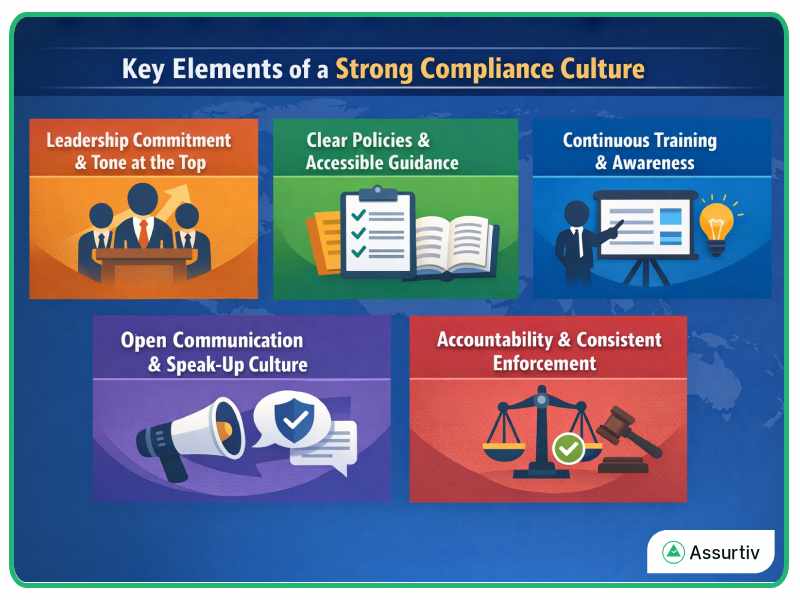
Building compliance with culture requires more than annual training sessions. It involves embedding compliance into everyday decision-making.
Leadership Commitment and Tone at the Top
Compliance culture starts with leadership. Executives and board members must:
- Actively support compliance initiatives
- Model ethical behaviour
- Allocate resources for compliance programs
When leadership treats compliance as a business priority, employees follow.
Clear Policies and Accessible Guidance
Employees must clearly understand:
- What is expected of them
- Which policies apply to their roles
- Where to seek guidance when unsure
Policies should be written in clear language and easily accessible.
Continuous Training and Awareness
Effective compliance culture relies on ongoing education, not one-time training.
Best practices include:
- Role-based compliance training
- Regular refreshers and updates
- Scenario-based learning
This ensures compliance remains relevant and practical.
Open Communication and Speak-Up Culture
Employees should feel safe reporting concerns without fear of retaliation.
A strong speak-up culture includes:
- Anonymous reporting channels
- Clear investigation procedures
- Transparent follow-up and remediation
Organizations that encourage reporting detect issues earlier and reduce long-term risk.
Accountability and Consistent Enforcement
Compliance culture weakens when rules are enforced inconsistently.
Organizations must:
- Hold all employees accountable, regardless of seniority
- Apply disciplinary measures fairly
- Reward ethical behaviour
Consistency reinforces trust and credibility.
Integrating Compliance Culture into GRC Programs
Compliance culture should not exist separately from formal GRC frameworks. Instead, it should be integrated into governance, risk management, and compliance processes.
Governance Alignment
- Board oversight of compliance culture metrics
- Leadership accountability for ethical conduct
Risk Management Integration
- Cultural risks included in risk assessments
- Monitoring behaviour-related risk indicators
Compliance Operations
- Training completion tracking
- Incident reporting and remediation workflows
When compliance culture is embedded into GRC, organizations gain visibility and accountability.
Measuring Compliance Culture Effectively
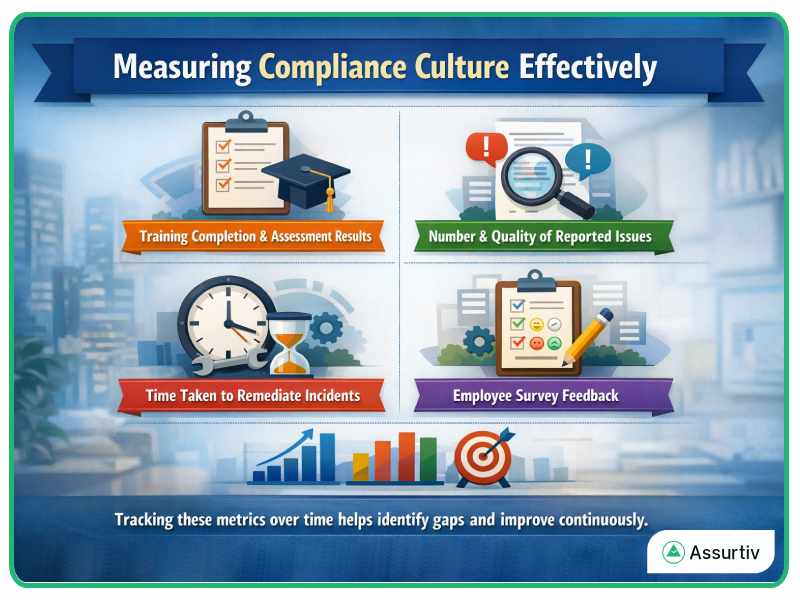
One of the biggest challenges organizations faces is measuring compliance culture. While culture is qualitative, it can still be monitored through meaningful indicators.
Key compliance culture metrics include:
- Training completion and assessment results
- Number and quality of reported issues
- Time taken to remediate incidents
- Employee survey feedback
Tracking these metrics over time helps organizations identify gaps and improve continuously.
Role of Technology in Supporting Compliance Culture
Technology plays a critical role in reinforcing compliance culture on a scale.
Modern compliance and GRC platforms help organizations:
- Deliver consistent training and communications
- Centralize policies and guidance
- Track incidents and investigations
- Monitor compliance performance
By automating compliance processes, organizations reduce friction and make ethical behaviour easier to follow.
Best Practices for Building a Sustainable Compliance Culture
Organizations with strong compliance cultures consistently apply these best practices:
- Make compliance part of everyday conversations, not just audits
- Align incentives with ethical behaviour
- Encourage transparency and early reporting
- Integrate compliance culture into performance evaluations
- Continuously assess and improve compliance programs
A sustainable compliance culture evolves with the organization and regulatory landscape.
The Future of Compliance Culture
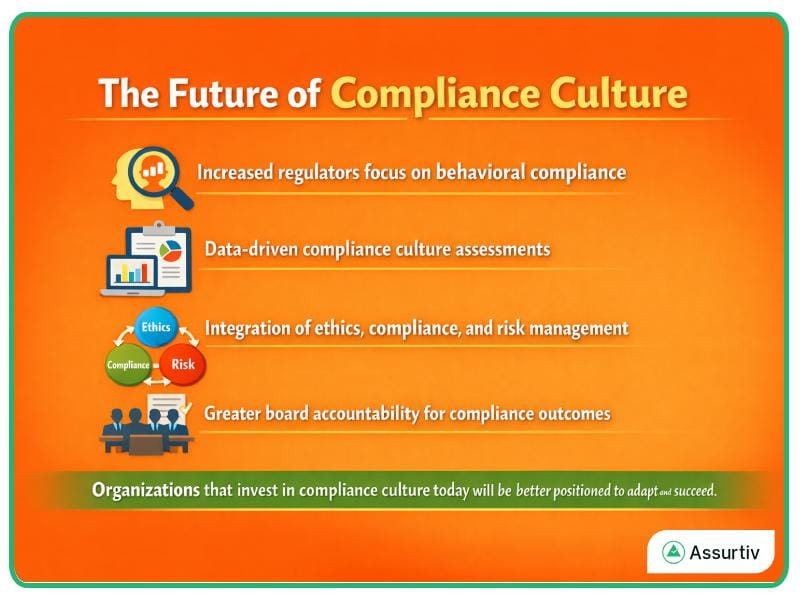
As regulations become more complex and enforcement more rigorous, compliance culture will play an even greater role in organizational resilience.
Future trends include:
- Increased regulators focus on behavioural compliance
- Data-driven compliance culture assessments
- Integration of ethics, compliance, and risk management
- Greater board accountability for compliance outcomes
Organizations that invest in compliance culture today will be better positioned to adapt and succeed.
Conclusion
Compliance culture is not a soft concept — it is a critical business enabler. Without it, compliance programs struggle to deliver meaningful risk reduction or regulatory confidence.
By building a strong compliance culture and integrating it into GRC frameworks, organizations can:
- Reduce regulatory risk
- Strengthen ethical decision-making
- Improve employee engagement
- Build lasting trust with stakeholders
In an environment of growing scrutiny, compliance culture is no longer optional — it is essential.