Compliance Training: Building Awareness and Accountability Across Organizations
Dhiren M | 9 Jan 2026 | Not Modified
Compliance training plays a critical role in shaping how employees think, decide, and act within an organization. Beyond policies and procedures, training is the foundation of ethical behavior and accountability. When employees clearly understand regulatory expectations and organizational values, compliance becomes part of daily decision-making—not just a checkbox of exercise.
A strong training framework directly reinforces a healthy compliance culture, where integrity, transparency, and responsibility are embedded across all levels of the organization. Without consistent and effective training, even well-designed compliance programs struggle to deliver real impact.
What Is Compliance Training?
Compliance training refers to structured learning initiatives designed to educate employees on laws, regulations, internal policies, and ethical standards relevant to their roles.
Definition and Purpose
The primary purpose of corporate compliance training is to:
- Reduce legal and regulatory risk
- Promote ethical conduct and accountability
- Ensure employees understand policies and procedures
- Support consistent decision-making across the organization
Difference Between Training and Awareness
- Compliance awareness focuses on informing employees that rules exist
- Employee compliance training ensures employees know how to apply those rules in real-world situations
Awareness builds knowledge; training builds competence and behavioral alignment.
Types of Compliance Training
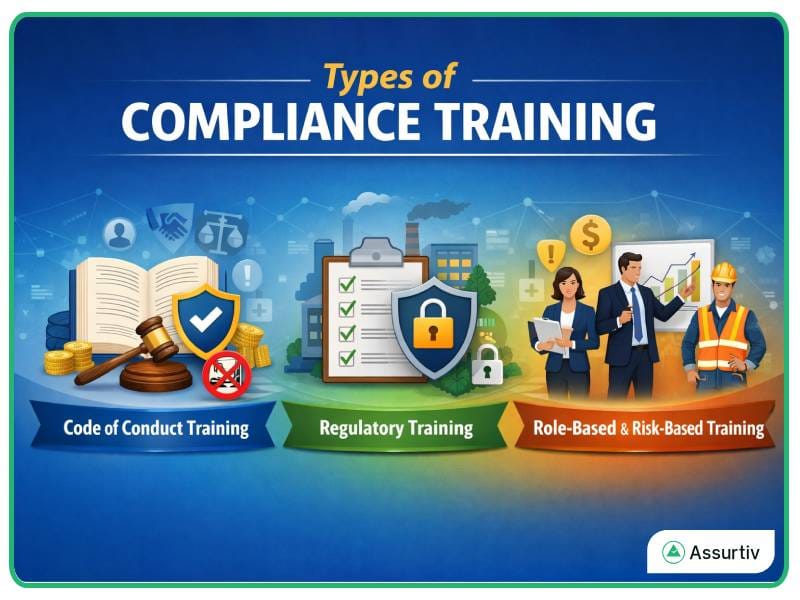 Effective compliance training programs are not one-dimensional. They are structured to address different risk areas and employee responsibilities.
Code of Conduct Training
- Organizational values and ethics
- Conflicts of interest
- Anti-bribery, corruption, and fraud prevention
Regulatory Training
- Industry-specific regulations
- Data protection and privacy laws
- Workplace health, safety, and environmental compliance
Role-Based and Risk-Based Training
- Role-based compliance training tailored for Managers, Leadership, Finance, HR, or Operations
- Risk-based training for high-risk roles or departments
- Scenario-driven modules aligned with job responsibilities
This targeted approach ensures relevance and improves engagement.
Building an Effective Compliance Training Program
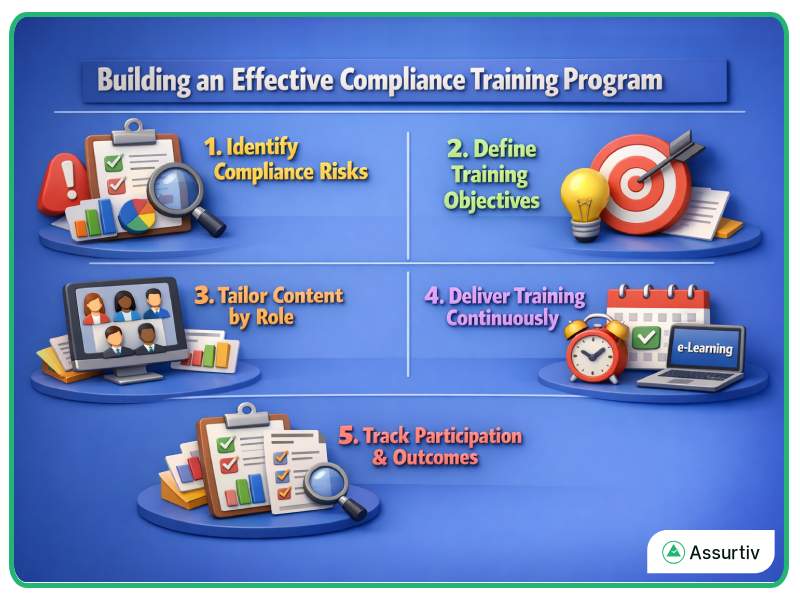 Organizations often ask how to build a compliance training program that drives real accountability. The answer lies in a structured, risk-focused approach.
Step-by-Step Approach
1. Identify Compliance Risks
- Conduct enterprise-wide risk assessments
- Identify regulatory, operational, and ethical risks
- Prioritize high-impact and high-likelihood risks
2. Define Training Objectives
- Clearly state what employees should know and do
- Align objectives with compliance and business goals
3. Tailor Content by Role
- Customize employee compliance training based on responsibilities
- Avoid generic, one-size-fits-all content
4. Deliver Training Continuously
- Onboarding programs for new hires
- Periodic refresher training
- Event-driven training for regulatory or policy changes
5. Track Participation and Outcomes
- Monitor completion rates and deadlines
- Maintain audit-ready training records
Common Compliance Training Challenges
Despite best intentions, many organizations face recurring challenges in compliance training.
Key Challenges
- Training fatigue caused by repetitive or lengthy modules
- One-size-fits-all approach that lacks role relevance
- Lack of measurement, focusing only on completion rather than impact
Overcoming these challenges requires strategic design and continuous improvement.
Measuring Compliance Training Effectiveness
Measuring effectiveness ensures that compliance training delivers real value beyond attendance.
Key Metrics to Track
- Completion rates
- Participation levels
- Timeliness of course completion
- Assessment scores
- Knowledge retention
- Understanding of key concepts
- Behavioral indicators
- Reduction in policy violations
- Increase in speak-up or incident reporting
- Improved audit and inspection outcomes
True effectiveness is reflected in changed behavior, not just completed courses.
Role of Technology in Compliance Training
Technology is a critical enabler of scalable and consistent compliance training.
Key Technology Components
- Learning Management Systems (LMS) for structured content delivery
- Automated tracking and reminders to ensure timely completion
- Integration with GRC platforms for centralized management of risks, policies, and training data
Technology transforms compliance training from a manual process into a measurable compliance control.
Best Practices for Sustainable Compliance Training
Applying proven compliance training best practices helps organizations build programs that last.
Recommended Best Practices
- Microlearning: Short, focused modules that improve retention
- Real-world scenarios: Practical examples employees can relate to
- Continuous updates: Reflect evolving regulations and risks
- Leadership involvement: Reinforce accountability and tone from the top
Sustainable training programs evolve alongside business and regulatory changes.
Training as a Cultural Enabler
Compliance training is not just about meeting regulatory requirements—it is a powerful cultural enabler. When training is risk-based, role-specific, continuously updated, and supported by technology, it builds awareness, accountability, and trust across the organization.
Investing in effective compliance training programs strengthens compliance culture, reduces risk, and empowers employees to do the right thing—every day.