Top Compliance Metrics to Track in 2026
Dhiren M | 6 Feb 2026 | 7 Feb 2026
In 2026, compliance is no longer just about meeting regulatory requirements—it’s about visibility, accountability, and trust. Organizations that rely on intuition or static reports struggle to detect risk early or demonstrate program effectiveness. This is where compliance metrics play a critical role.
Well-defined metrics provide insight into how compliance programs actually perform, helping leaders make informed decisions and strengthen compliance culture. By tracking the right data, organizations move from reactive compliance to proactive risk management.
What Are Compliance Metrics?
Compliance metrics are quantitative and qualitative measures used to evaluate how effectively an organization meets regulatory requirements, internal policies, and ethical standards. They form the foundation of compliance measurement and performance monitoring.
Simply put, if you’re asking what are compliance metrics, they are the data points that show whether compliance activities are working as intended.
Leading vs. Lagging Indicators
Understanding indicator types is essential for compliance performance metrics:
Leading indicators
- Predict potential issues before they occur
- Examples: training completion rates, policy acknowledgements
Lagging indicators
- Reflect issues that have already happened
- Examples: violations, fines, audit findings
An effective program balances both.
Key Compliance Metrics to Track
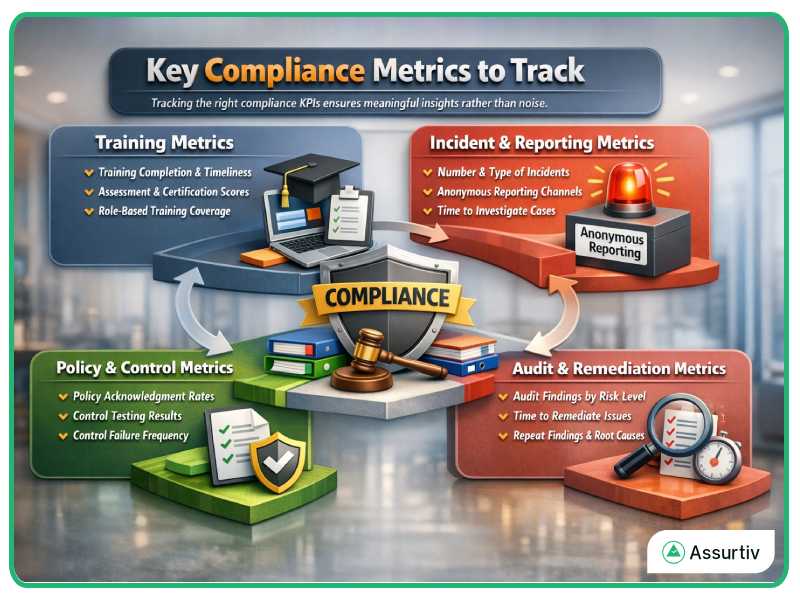
Tracking the right compliance KPIs ensures meaningful insights rather than noise.
Training Metrics
Training data reveals whether employees are equipped to meet expectations. Key metrics include:
- Training completion and timeliness
- Assessment and certification scores
- Role-based training coverage
These metrics are foundational to compliance effectiveness metrics and directly support compliance training initiatives.
Incident and Reporting Metrics
Reporting metrics highlight trust, transparency, and early risk detection:
- Number and type of incidents reported
- Use of anonymous reporting channels
- Time to acknowledge and investigate cases
These metrics connect closely with speak-up culture and compliance reporting systems.
Policy and Control Metrics
Policies and controls are only effective when followed. Track:
- Policy acknowledgment rates
- Control testing results
- Frequency of control failures
These indicators help answer how to measure regulatory compliance across the organization.
Audit and Remediation Metrics
Audit-related metrics show how well issues are resolved:
- Audit findings by risk level
- Time to remediate issues
- Repeat findings and root causes
These metrics demonstrate accountability and continuous improvement with Compliance Training.
Measuring Compliance Culture
One of the most common questions is how to measure compliance culture. While culture is intangible, it can be measured through consistent indicators.
Surveys
- Employee perception surveys on ethics and compliance
- Confidence in reporting concerns
- Awareness of policies and procedures
Behavioral Indicators
- Reduction in repeat violations
- Increased proactive risk reporting
- Consistent policy adherence
Reporting Patterns
- Trends in incident reporting volumes
- Quality and detail of reports
- Willingness to report across departments
Together, these indicators provide a reliable view of cultural maturity.
Building a Compliance Metrics Framework
A structured framework ensures metrics remain relevant and actionable.
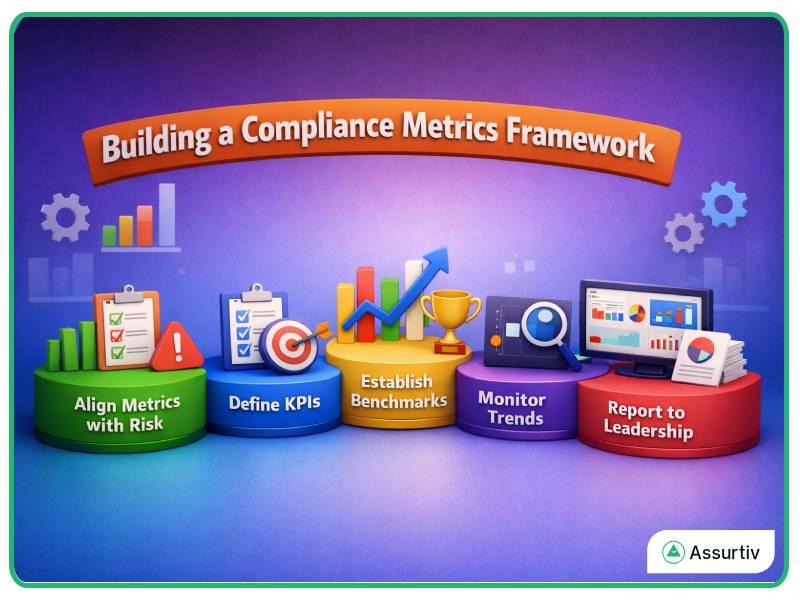
Align Metrics with Risk
- Map metrics to key regulatory and operational risks
- Focus on high-impact risk areas
Define KPIs
- Select clear, measurable compliance KPIs
- Ensure KPIs support strategic objectives
- Clarify how to measure compliance KPI consistently
Establish Benchmarks
- Set internal and external benchmarks
- Track performance over time rather than in isolation
Monitor Trends
- Identify patterns and anomalies
- Use analytics to understand root causes
- Apply insights on how to analyze compliance metrics in analytics
Report to Leadership
- Use a centralized compliance metrics dashboard
- Highlight trends, risks, and actions
- Focus on insights, not raw data
Common Compliance Metrics Challenges
Even mature programs face obstacles when measuring compliance.
Data Silos
- Disconnected systems across departments
- Manual data consolidation
Vanity Metrics
- Metrics that look good but provide little insight
- Over-reliance on completion rates without behavior analysis
Lack of Actionability
- Metrics not tied to decisions or corrective actions
- Reporting without ownership
Overcoming these challenges is essential for meaningful compliance measurement.
Best Practices for Data-Driven Compliance
To maximize value from compliance data, organizations should follow proven practices.
Executive Dashboards
- Real-time, role-specific dashboards
- Clear visualization of risks and trends
- Focus on actionable insights
Continuous Improvement
- Regularly review and refine metrics
- Adjust KPIs as risks and regulations evolve
Governance Oversight
- Define accountability for metric ownership
- Integrate metrics into compliance and risk committees
These practices turn data into decisions.
Metrics as a Cultural Enabler
Compliance metrics are not just reporting tools—they are cultural enablers. When organizations track the right metrics, they gain clarity on behavior, accountability, and risk exposure.
In 2026, effective compliance metrics will be those that measure not just activity, but impact. By aligning metrics with risk, culture, and strategy, organizations strengthen compliance effectiveness and build trust at every level.
Measure what matters. Act on insights. Strengthen your compliance culture.