ESG Audit: Preparing for ESG Assurance and Compliance
Rudramuni Swamy H M | 6 Jan 2026 | Not Modified
Environmental, Social, and Governance (ESG) reporting has moved rapidly from voluntary disclosure to regulated obligation. As regulators, investors, and stakeholders demand greater transparency, ESG audit is becoming a standard expectation rather than an exception.
Organizations are now required not only to report ESG information but also to prove its accuracy, completeness, and governance. This shift has made ESG audit a critical component of compliance programs and board oversight. In this post, we explain what ESG audits are, how the ESG audit process works, and how organizations can prepare effectively for ESG assurance and compliance.
ESG Audits Are No Longer Optional
Regulatory bodies across regions are introducing mandatory ESG disclosure and assurance requirements.
Frameworks such as CSRD (Corporate Sustainability Reporting Directive), ISSB (International Sustainability Standards Board), and climate-related disclosure rules increasingly require organizations to validate ESG data and controls.
CSRD focuses on mandatory sustainability reporting for EU companies, while the ISSB provides voluntary global standards aimed at enhancing financial disclosures related to sustainability.
As a result, ESG audits are now central to ESG Compliance & GRC Integration, ensuring ESG reporting is governed by the same rigor as financial and operational compliance. Without structured preparation, organizations face higher risk of audit findings, regulatory penalties, and reputational damage.
What Is an ESG Audit?
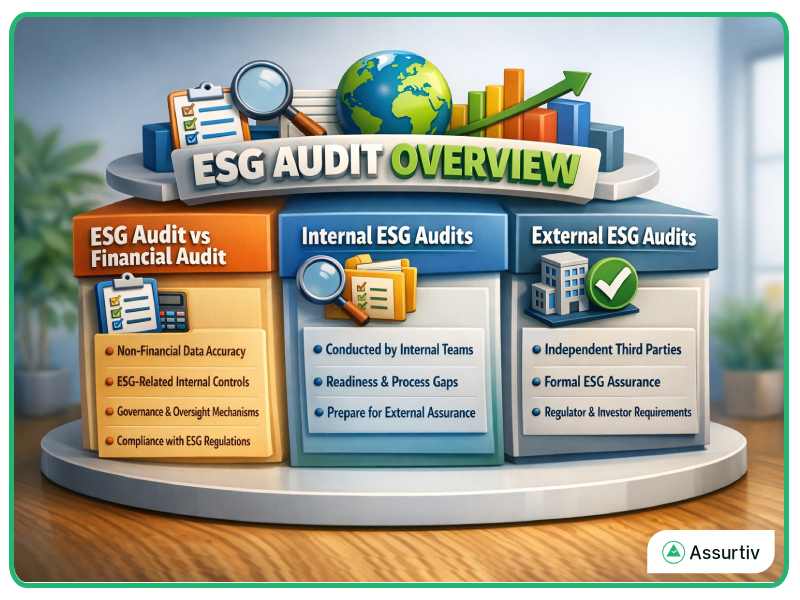 An ESG audit is a formal assessment of an organization’s ESG data, controls, processes, and governance structures to verify compliance with regulatory requirements, standards, or internal commitments.
ESG Audit vs Financial Audit
While financial audits focus on financial statements and accounting controls, ESG audits examine:
- Non-financial data accuracy
- ESG-related internal controls
- Governance and oversight mechanisms
- Compliance with ESG regulations and frameworks
ESG audits often involve broader data sources and cross-functional ownership, making them more complex than traditional audits.
Internal vs External ESG Audits
Internal ESG Audits
- Conducted by internal audit or compliance teams
- Focus on readiness, control effectiveness, and process gaps
- Help prepare for external assurance
External ESG audits (assurance)
- Conducted by independent third parties
- Provide formal ESG assurance statements
- Increasingly required by regulators and investors
Both play a critical role in a mature ESG audit program.
ESG Audit Scope & Requirements
The scope of an ESG compliance audit typically covers multiple dimensions:
Data Accuracy
Auditors assess whether ESG data is:
- Complete and consistent
- Supported by verifiable evidence
- Collected using defined methodologies
Inaccurate or unsupported data is one of the most common ESG audit findings.
Controls
ESG audits evaluate whether internal controls exist to:
- Validate ESG data
- Prevent errors or manipulation
- Ensure consistent reporting
Controls should be documented, tested, and reviewed regularly.
Governance Oversight
Auditors review governance structures, including:
- Board and management oversight
- ESG policies and accountability
- Escalation and decision-making processes
Strong governance is critical for ESG credibility.
Third-Party Disclosures
Many ESG risks originate in the supply chain. ESG audits often examine:
- Supplier ESG data
- Third-party disclosures
- Due diligence and monitoring processes
ESG Audit Process (End-to-End)
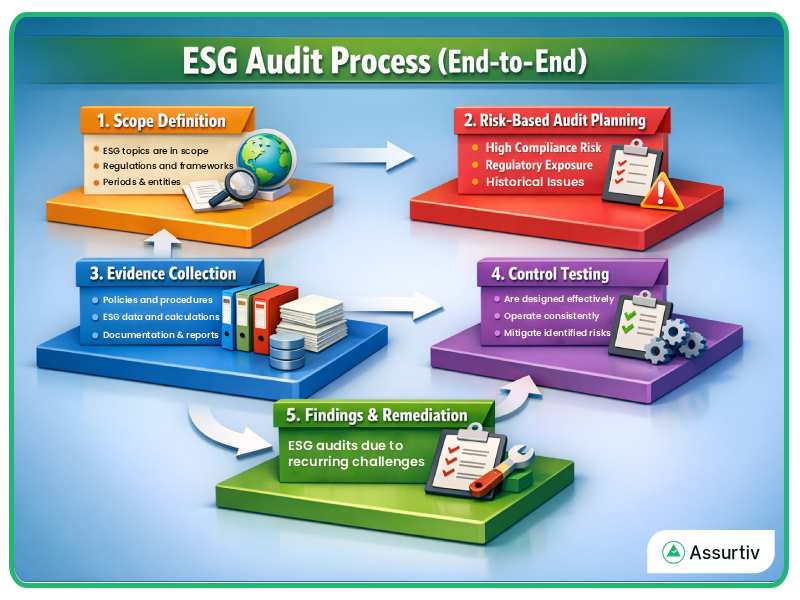 Understanding the ESG audit process explained step-by-step helps organizations prepare effectively.
Step 1: Scope Definition
Define:
- Which ESG topics are in scope
- Applicable regulations and frameworks
- Reporting periods and entities
Clear scoping reduces surprises later.
Step 2: Risk-Based Audit Planning
Auditors prioritize areas with:
- Higher ESG compliance risk
- Regulatory exposure
- Historical issues or gaps
Risk-based planning ensures efficient use of resources.
Step 3: Evidence Collection
Organizations must provide:
- Policies and procedures
- ESG data and calculations
- Supporting documentation and reports
Centralized evidence management significantly reduces audit friction.
Step 4: Control Testing
Auditors test whether ESG controls:
- Are designed effectively
- Operate consistently
- Mitigate identified risks
Control failures often lead to audit findings.
Step 5: Findings and Remediation
Audit findings are documented and categorized by severity. Organizations must:
- Define remediation actions
- Assign ownership
- Track completion
Timely remediation is essential for audit closure.
Common ESG Audit Challenges
Despite growing awareness, many organizations struggle with ESG audits due to recurring challenges.
Data Fragmentation
ESG data often resides across multiple systems, teams, and spreadsheets, making consolidation difficult.
Lack of Ownership
Unclear accountability for ESG metrics leads to delays, inconsistencies, and audit gaps.
Inconsistent Documentation
Without standardized documentation, organizations struggle to demonstrate control effectiveness and compliance.
Preparing for ESG Audits Using GRC
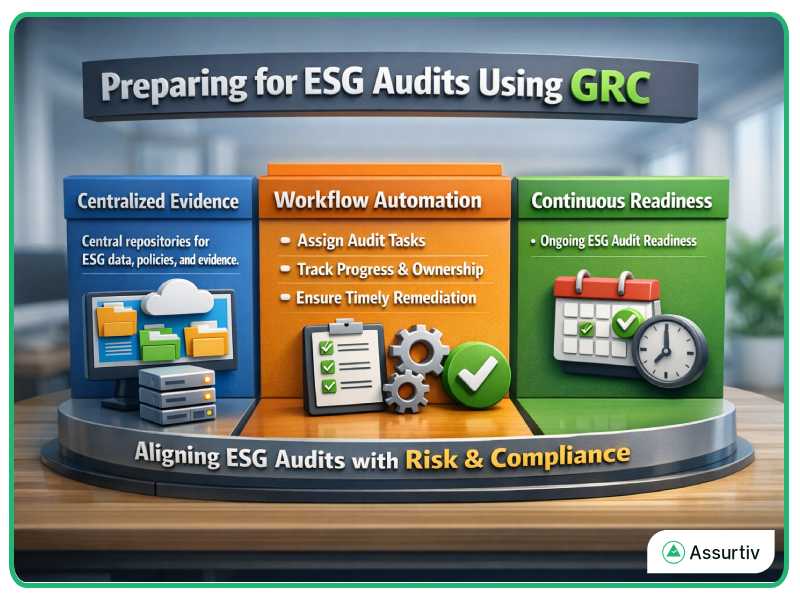 Modern organizations increasingly rely on GRC capabilities to prepare ESG audits efficiently.
Centralized Evidence
Central repositories ensure ESG data, policies, and evidence are easily accessible and audit ready.
Workflow Automation
Automated workflows help:
- Assign audit tasks
- Track progress and ownership
- Ensure timely remediation
Continuous Readiness
Rather than preparing once a year, organizations move toward continuous ESG audit readiness, reducing last-minute pressure and risk.
Integrated GRC approaches help align ESG audits with broader risk and compliance activities.
ESG Audit Best Practices for 2026
Leading organizations are adopting forward-looking ESG audit practices:
- Treat ESG audits as ongoing governance processes
- Prepare for assurance early, not reactively
- Integrate ESG risk, compliance, and audit functions
- Align ESG audits with enterprise risk management
- Use technology to improve consistency and transparency
These practices improve resilience as ESG regulations continue to evolve.
ESG Audits as Part of Ongoing Governance
ESG audits are no longer optional or purely reputational exercises—they are a fundamental component of regulatory compliance and corporate governance.
By establishing structured ESG audit processes and embedding them into GRC frameworks, organizations can:
- Improve data integrity and transparency
- Strengthen governance and oversight
- Reduce regulatory and reputational risk
Preparing ESG audits early and continuously is the most effective way to achieve sustainable ESG assurance and compliance.
Want to strengthen ESG audit readiness?
Modern GRC platforms help organizations centralize ESG evidence, automate audit workflows, and maintain continuous compliance—transforming ESG audits from reactive events into strategic governance tools.