ESG Third Party Risk Management: Managing Supplier & Vendor ESG Risks
Rudramuni Swamy H M | 13 Jan 2026 | Not Modified
Environmental, Social, and Governance (ESG) risks no longer stop at an organization’s internal operations. Today, a significant portion of ESG exposure originates from suppliers, vendors, and third parties across the value chain. Labor violations, environmental non-compliance, or unethical practices by a single supplier can quickly become a regulatory, financial, and reputational crisis.
This is why ESG third party risk management has become a critical priority for compliance teams. Managing ESG supplier risk requires a structured, ongoing approach that aligns with enterprise governance, risk, and compliance (GRC) programs rather than ad hoc assessments.
Because supply chain ESG risks directly affect compliance and reputation, they must be managed as part of a broader governance and compliance strategy rather than as isolated supplier checks
This guide explains what ESG third-party risk is, how to assess it, and how organizations can implement an effective ESG third-party risk framework.
Why ESG Risk Extends Beyond Your Organization
Organizations are increasingly held accountable not only for their own ESG performance, but also for the actions of their suppliers and vendors. Regulatory frameworks, investor expectations, and customer scrutiny now extend ESG responsibility across the entire supply chain.
Key drivers include:
- Globalized supply chains
- Outsourced operations and services
- Heightened regulatory enforcement
- Increased focus on human rights and environmental impact
Because supply chain ESG risk directly affects compliance and reputation, it must be addressed as part of a broader ESG Compliance & GRC Integration strategy—where third-party risks are governed with the same rigor as internal risks.
What Is ESG Third Party Risk?
ESG third party risk refers to the potential environmental, social, or governance harm arising from the actions, practices, or failures of external vendors, suppliers, contractors, or partners.
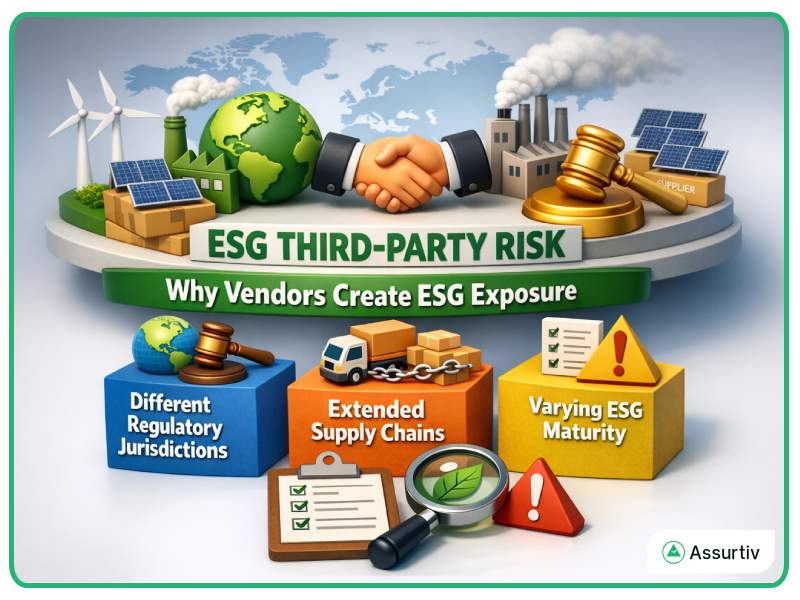
Why Vendors Create ESG Exposure
Third parties often:
- Operate in different regulatory jurisdictions
- Use subcontractors or extended supply chains
- Have varying levels of ESG maturity and controls
As a result, organizations face indirect ESG exposure even when internal policies are strong. Managing vendor ESG compliance is therefore essential to overall ESG risk management.
Key ESG Risks in the Supply Chain
A comprehensive ESG vendor risk assessment typically focuses on three core risk areas:
Environmental Risks
Environmental risks in the supply chain may include:
- Pollution or waste violations
- Excessive emissions
- Improper resource usage
- Failure to meet environmental regulations
Environmental incidents involving suppliers can trigger regulatory action and brand damage.
Labor and Human Rights Risks
Social risks are among the most scrutinized ESG issues in supply chains.
Examples include:
- Unsafe working conditions
- Child or forced labor
- Discrimination or unfair labor practices
- Inadequate worker protections
These risks often occur several tiers down the supply chain, making visibility critical.
Ethics and Governance Failures
Governance-related supply chain risks include:
- Bribery and corruption
- Fraud or financial misconduct
- Conflicts of interest
- Weak internal controls
Governance failures at the vendor level can expose organizations to legal and compliance risk.
ESG Third-Party Risk Management Framework

An effective ESG third-party risk management program follows a structured, repeatable framework.
Step 1: Identify ESG-Critical Vendors
Not all vendors pose the same level of ESG risk. Begin by identifying:
- High-spend suppliers
- Vendors operating in high-risk regions
- Suppliers critical to operations or reputation
This enables a tiered risk-based approach.
Step 2: Conduct ESG Due Diligence
Perform ESG due diligence during onboarding and periodically thereafter. This includes reviewing:
- ESG policies and commitments
- Regulatory compliance history
- Past incidents or violations
Step 3: Risk Score Suppliers
Apply an ESG vendor risk assessment methodology that evaluates:
- Likelihood of ESG failures
- Potential impact (regulatory, reputational, operational)
Risk scoring helps prioritize oversight and remediation.
Step 4: Define Contractual ESG Requirements
Contracts should clearly define:
- ESG expectations and standards
- Reporting and audit rights
- Consequences for non-compliance
Contractual alignment strengthens enforceability.
Step 5: Monitor Continuously
ESG third-party risk is dynamic. Continuous monitoring ensures emerging risks are identified early rather than after incidents occur.
ESG Third-Party Risk Assessments
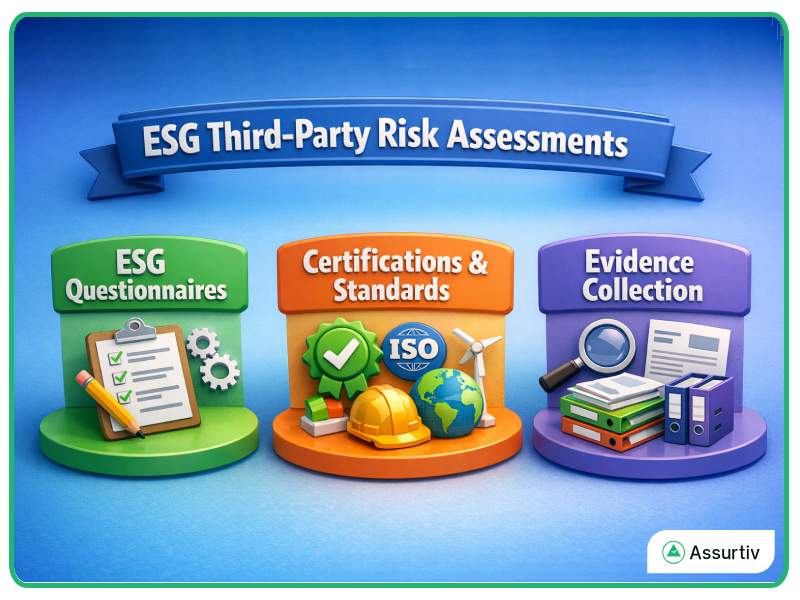
Organizations use multiple tools to assess supplier ESG risk.
ESG Questionnaires
Standardized questionnaires collect information on:
- Environmental practices
- Labor and human rights policies
- Governance controls
These are often the first line of assessment.
Certifications and Standards
Certifications provide independent validation of ESG practices, such as:
- Environmental management certifications
- Labor and safety standards
- Ethical sourcing programs
Evidence Collection
Supporting documentation—policies, audits, reports—helps verify supplier claims and reduces reliance on self-attestation.
Integrating ESG Vendor Risk Into GRC
ESG supplier risk should not be managed in isolation. Integration into GRC ensures consistency and accountability.
Vendor Risk Registers
ESG third party risks should be included in centralized vendor risk registers alongside operational and cybersecurity risks.
Incident Tracking
When ESG issues arise, they should be logged, investigated, and remediated through formal workflows.
Reporting and Escalation
Clear reporting structures support:
- Management oversight
- Board-level visibility
- Regulatory and audit readiness
Integrated reporting strengthens governance and transparency.
Best Practices for ESG Supply Chain Governance
Organizations with mature ESG programs follow these best practices:
- Use a tiered, risk-based vendor approach
- Reassess ESG risks regularly
- Monitor third parties continuously, not periodically
- Collaborate closely with procurement teams
- Align ESG expectations with sourcing decisions
Strong ESG supply chain governance requires cross-functional ownership and clear accountability.
Third Party ESG Risk Is an Enterprise Risk
ESG risks introduced by suppliers and vendors are no longer peripheral concerns—they are enterprise risks that directly affect compliance, reputation, and resilience.
By implementing a structured ESG third party risk framework, organizations can:
- Proactively manage ESG supplier risk
- Strengthen regulatory compliance
- Improve transparency across the supply chain
- Protect long-term enterprise value
Looking to strengthen ESG third party risk management within your GRC program?
Modern GRC platforms enable organizations to centralize vendor ESG risks, automate assessments, and monitor compliance continuously—turning third-party ESG oversight into a strategic advantage rather than a reactive burden.