Speak-Up Culture in GRC: From Silence to Safety
Dhiren M | 20 Jan 2026 | Not Modified
Why is Speak-Up Culture essential? A strong speak-up culture is one of the most effective early-warning systems in governance, risk, and compliance (GRC). When employees feel safe to raise concerns, organizations can detect misconduct early before it escalates into regulatory breaches, financial losses, or reputational damage.
In contrast, silence creates blind spots. Issues go unreported, risk multiply, and trust erodes. That’s why speak up culture is a core pillar of a healthy compliance culture, It transforms organizations from reactive to preventive by encouraging openness, accountability, and ethical behavior.
What Is a Speak-Up Culture?
The speak up culture meaning refers to an organizational environment where employees feel safe, supported, and encouraged to report concerns, ask questions, or challenge unethical behavior without fear of retaliation.
A strong speak-up culture at the workplace ensures that raising concerns is seen as responsible behavior not disloyalty.
Speak-Up vs. Whistleblowing
Although often used interchangeably, they are not the same:
- Speak-up culture focuses on everyday openness and early reporting
- Whistleblowing typically involves reporting serious misconduct, often through formal or external channels
An effective speak-up culture reduces the need for whistleblowing by addressing issues early and internally.
Barriers to Speaking Up
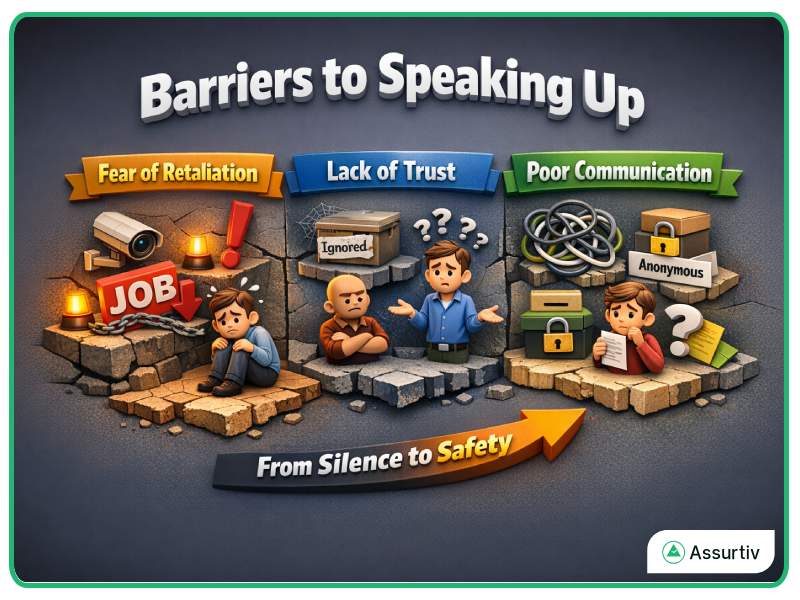 Many organizations struggle to build a speak-up culture due to persistent human and systemic barriers.
Fear of Retaliation
- Concerns about job security, promotions, or peer backlash
- Lack of confidence in non-retaliation commitments
Lack of Trust
- Past experiences where reports were ignored
- No visible action taken after concerns were raised
Poor Communication
- Unclear reporting processes
- Limited awareness of anonymous reporting options
Overcoming these barriers is essential to move from silence to safety.
Key Components of a Speak-Up Culture
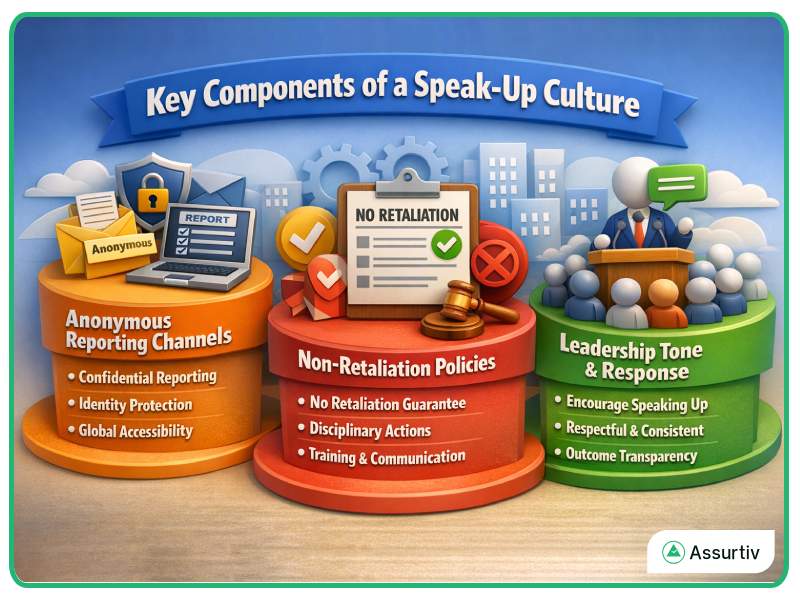 A sustainable speak-up culture in compliance requires clear structures, leadership commitment, and trust-building mechanisms.
Anonymous Reporting Channels
- Confidential and anonymous reporting options
- Protection of reporter identity
- Accessibility across geographies and roles
Anonymous reporting lowers the emotional and professional risk of speaking at work when something is wrong.
Non-Retaliation Policies
- Clear, documented non-retaliation commitments
- Disciplinary consequences for retaliation
- Regular communication and training
Non-retaliation is not just a policy; it must be enforced and demonstrated.
Leadership Tone and Response
- Leaders visibly encourage speaking up
- Consistent, respectful handling of concerns
- Transparency on outcomes where appropriate
Leadership response defines the real speaking up culture experience for employees.
Designing Effective Reporting Mechanisms
Strong reporting mechanisms are the backbone of effective speaking-up culture.
Hotlines
- Phone-based reporting for immediate concerns
- Multilingual and 24/7 availability
- Often preferred for sensitive or urgent issues
Digital Reporting Platforms
- Web and mobile-based reporting tools
- Case tracking and documentation
- Analytics for trend identification
Modern compliance reporting systems improve accessibility, consistency, and oversight.
Third-Party Reporting Options
- Independent providers to enhance trust
- Reduced fear of internal bias
- Often aligned with whistleblower reporting best practices
Third-party options are especially valuable in high-risk or highly regulated industries.
Handling Reports and Investigations
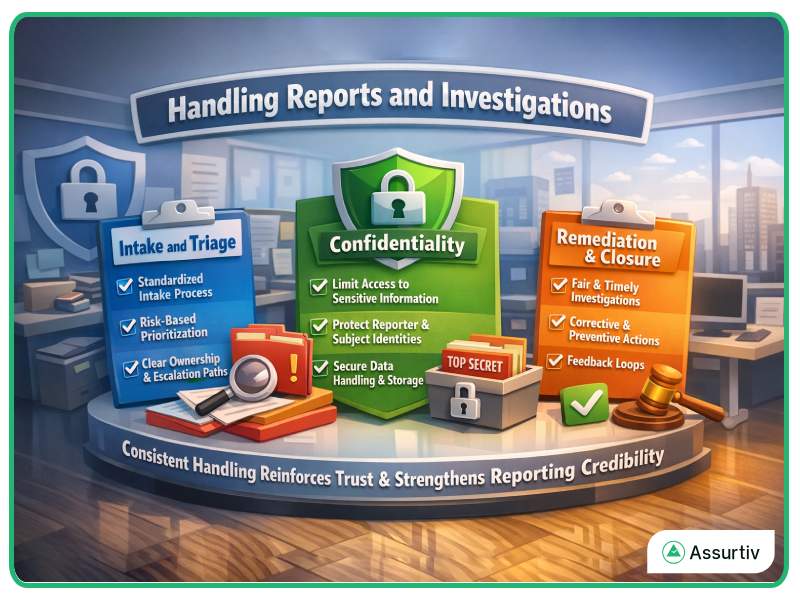 How reports are handled determines whether employees will continue to speak up.
Intake and Triage
- Standardized intake process
- Risk-based prioritization
- Clear ownership and escalation paths
Confidentiality
- Limit access to sensitive information
- Protect reporter and subject identities
- Secure data handling and storage
Remediation and Closure
- Fair and timely investigations
- Corrective and preventive actions
- Feedback loops where possible
Consistent handling reinforces trust and strengthens reporting credibility.
Measuring Speak-Up Culture
What gets measured gets improved. Organizations must track indicators that reflect trust and effectiveness.
Key Metrics to Monitor
Reporting trends
- Volume and type of reports
- Trends by department or risk area
Resolution timelines
- Time to acknowledge, investigate, and close cases
- Backlog of unresolved reports
Employee trust indicators
- Survey feedback on psychological safety
- Willingness to report concerns
- Repeat reporting behavior
Together, these metrics reveal whether speak-up culture is truly embedded or only symbolic.
Speak-Up as Risk Prevention
A strong speak-up culture shifts organizations from reactive compliance to proactive risk prevention. When employees feel safe to raise concerns, misconduct is detected earlier, decisions improve, and trust grows across the organization.
Building a speak-up culture requires more than tools; it demands leadership commitment, fair processes, and consistent action. By investing in effective reporting systems and non-retaliation practices, organizations move from silence to safety, strengthening their overall compliance with culture and long-term resilience.
Encourage speaking. Protect trust. Strengthen your compliance culture.