Top GRC Compliance Challenges in 2026
Dhiren M | 30 Jan 2026 | Not Modified
Governance, Risk, and Compliance (GRC) is undergoing a major shift in 2026. Organizations are facing intensified regulatory scrutiny, expanding digital risks, and growing expectations from regulators, boards, and stakeholders. What once could be managed through fragmented processes and manual controls now requires a more integrated, strategic approach.
As regulations evolve faster and risk of landscapes become more interconnected, GRC compliance challenges are no longer limited to legal obligations. They directly impact reputation, resilience, and long-term business performance. Understanding these challenges is essential for building a strong compliance culture and ensuring sustainable governance.
What Is GRC Compliance?
GRC compliance refers to the coordinated approach organizations use to manage governance responsibilities, identify and mitigate risks, and comply with regulatory and internal requirements. It brings together policies, controls, processes, and oversight to ensure the organization operates ethically and within defined risk boundaries.
Rather than treating governance, risk, and compliance as separate functions, GRC aligns them into a unified framework that supports strategic decision-making.
Why GRC Matters More in 2026
In 2026, GRC matters more than ever due to:
- Rapid regulatory expansion across industries and regions
- Increased accountability at board and executive levels
- Greater reliance on digital systems, data, and third parties
- Heightened focus on ethics, transparency, and culture
Organizations that fail to modernize their GRC approach face growing regulatory, financial, and reputational exposure.
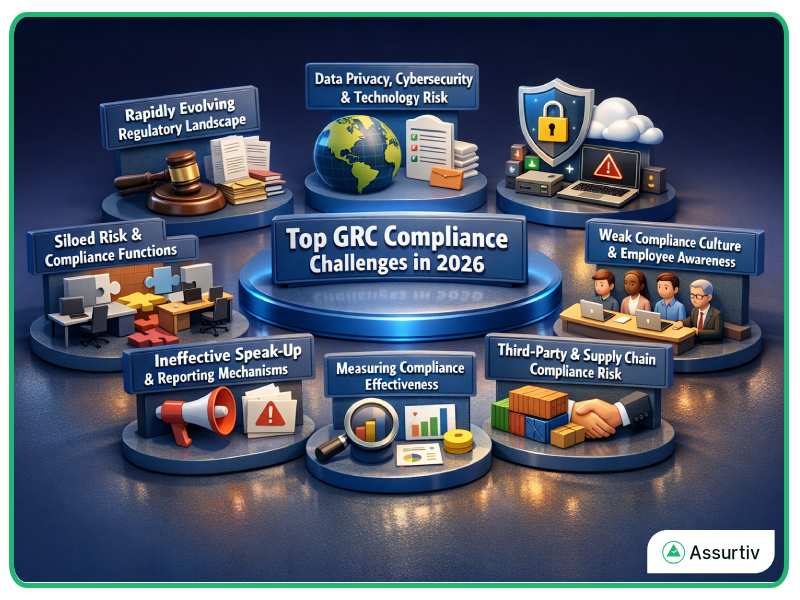
Top GRC Compliance Challenges in 2026
Rapidly Evolving Regulatory Landscape
One of the biggest GRC compliance challenges in 2026 is keeping pace with constantly changing regulations. Organizations must navigate overlapping global, regional, and industry-specific requirements while ensuring policies and controls remain current.
Without centralized regulatory tracking and updates, compliance teams struggle to interpret changes, implement controls, and demonstrate ongoing compliance—leading to increased audit findings and enforcement risk.
Data Privacy, Cybersecurity, and Technology Risk
Digital transformation has expanded the compliance risk surface. Data protection regulations continue to tighten, while cyber threats grow more sophisticated. Organizations must now manage compliance across cloud platforms, AI-driven systems, and complex IT ecosystems.
Third-party technology vendors and supply chains further complicate compliance, as organizations are increasingly held accountable for data breaches and cyber incidents beyond their direct control.
Siloed Risk and Compliance Functions
Many organizations still operate with fragmented GRC functions, where risk management, compliance, audit, and legal teams work in isolation. This siloed approach limits enterprise-wide visibility and creates duplication of effort.
Disconnected systems and data make it difficult to identify emerging risks, prioritize remediation, and provide leadership with a unified view of compliance performance.
Weak Compliance Culture and Employee Awareness
A strong compliance framework cannot succeed without employee engagement. In 2026, weak compliance culture remains a persistent challenge. Employees often view compliance as a checkbox activity rather than a shared responsibility.
Generic training, lack of role relevance, and limited leadership involvement contribute to low awareness and inconsistent behavior. When employees don’t understand how compliance applies to their roles, risk exposure increases across the organization.
Ineffective Speak-Up and Reporting Mechanisms
Despite growing regulatory focus on whistleblower protection, many organizations still struggle to build trust in their reporting systems. Employees may hesitate to raise concerns due to fear of retaliation or lack of confidence in how reports are handled.
Ineffective speak-up frameworks result in underreporting, delayed issue detection, and missed opportunities to prevent misconduct before it escalates.
Measuring Compliance Effectiveness
Another major challenge is measuring whether compliance programs actually work. Many organizations rely heavily on activity-based metrics, such as training completion rates or policy acknowledgements.
In 2026, regulators and boards increasingly expect meaningful insights into compliance effectiveness—such as behavioral trends, reporting quality, and risk reduction, rather than surface-level statistics.
Third-Party and Supply Chain Compliance Risk
Regulatory expectations around third-party oversight continue to expand. Organizations are now responsible for ensuring that vendors, partners, and suppliers meet compliance and ethical standards.
Manual due diligence processes, inconsistent monitoring, and lack of real-time visibility make third-party compliance one of the most complex and resource-intensive GRC challenges.
Impact of These GRC Compliance Challenges
Unaddressed GRC compliance challenges can have serious consequences, including:
- Regulatory penalties and enforcement actions
- Reputational damage and loss of stakeholder trust
- Increased operational disruptions and monetary loss
- Reduced confidence in leadership decision-making
In a highly regulated and transparent environment, compliance failures quickly become enterprise-wide risks.
How Organizations Can Address GRC Compliance Challenges
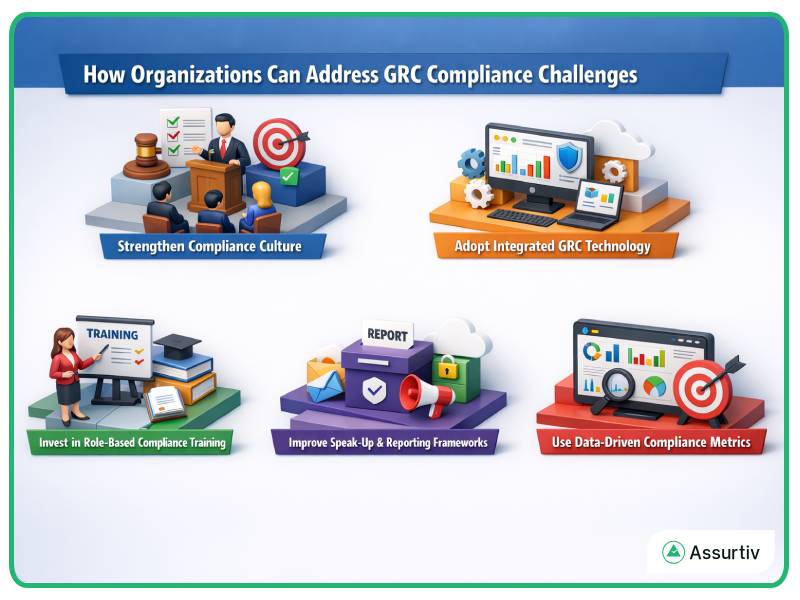
Strengthen Compliance Culture
Building a strong compliance culture starts with leadership. Organizations must reinforce tone from the top, clearly define accountability, and integrate compliance into everyday decision-making.
Regular communication, visible leadership involvement, and consistent consequences for misconduct help embed compliance into organizational behavior.
Adopt Integrated GRC Technology
Modern GRC challenges require modern solutions. Integrated GRC platforms centralize risk, compliance, policy, and report data into a single system of record.
Automation improves efficiency, while real-time dashboards provide leadership with visibility into risks, controls, and compliance performance across the enterprise.
Invest in Role-Based Compliance Training
Generic training is no longer sufficient. Organizations should implement role-based compliance training aligned with specific risks and responsibilities.
Continuous learning models—rather than annual, one-time training—help reduce fatigue and improve knowledge of retention while reinforcing accountability.
Improve Speak-Up and Reporting Frameworks
Effective reporting mechanisms are essential for early risk detection. Organizations should offer anonymous and confidential reporting channels, supported by strong non-retaliation policies.
Transparent investigation processes and timely remediation build trust and encourage employees to speak up when something feels wrong.
Use Data-Driven Compliance Metrics
Measuring what matters is critical in 2026. Organizations should track both leading and lagging compliance indicators, focusing on trends, behaviours, and outcomes.
Centralized compliance metrics dashboards enable leadership to identify emerging risks, prioritize actions, and demonstrate program effectiveness.
Preparing for GRC Compliance in 2026 and Beyond
The future of GRC compliance is proactive, integrated, and data driven. Organizations must move beyond reactive compliance and embed on governance and risk management into strategic planning.
By aligning compliance with business objectives, leveraging technology, and investing in culture, organizations can adapt to regulatory change with confidence.
Turning GRC Challenges into Opportunities
While GRC compliance challenges in 2026 are complex, they also present an opportunity to build stronger, more resilient organizations. Those that embrace integrated GRC frameworks, data-driven insights, and a strong compliance culture will be better positioned to manage risk and earn stakeholder trust.
The organizations that succeed in 2026 will not just comply—they will lead to integrity, transparency, and accountability.